13 principles of the "Linear Method" to improve your development workflow
Linear is a notable software product known for its signature opinionated approach. The "Linear method" for managing the development cycle has helped many startups revamp their workflows.

Let's dive into the Linear Method and explain how Ducalis makes your Linear and Jira Cloud, Jira Server, Asana, ClickUp, Trello, Github, and YouTrack development experience more efficient.
Many great ideas formed in a way that I could borrow from many development teams to make their collaboration and development more efficient and less stressful. I decided to quote Linear Method’s ideas and explain how Ducalis can help you with it:
Set team direction and Prioritize for impact.
Prioritize enablers and blockers.
Is it clear why this priority was set?
Have you reached a consensus with your team regarding that priority?
Is that priority still relevant?
Not enough values to sort by priority.
Run cross-functional teams.
Scope issues to be as small as possible.
Keep a manageable backlog.
Build in public.
Incorporate the feedback.
Build with users.
Understand your users.
Build for the right users.
Write a changelog.
Say no to busy work.
Invest in planning.
Set team direction and Prioritize for impact
Setting direction is one of the most important things you’ll do when building a product and company. A clear direction aligns everyone to work toward the same goals. It helps individuals make daily decisions, teams prioritize projects and all members of your organization feel motivated toward a shared purpose.
Keeping all the goals, details, OKRs, metrics, and success criteria in mind while performing daily work can be challenging.
With Ducalis, you can transform your goals into evaluation criteria. The easy-to-evaluate UI allows your teammates to pass each of your backlog items. This approach will help "train the mind" to think about every task regarding goals.
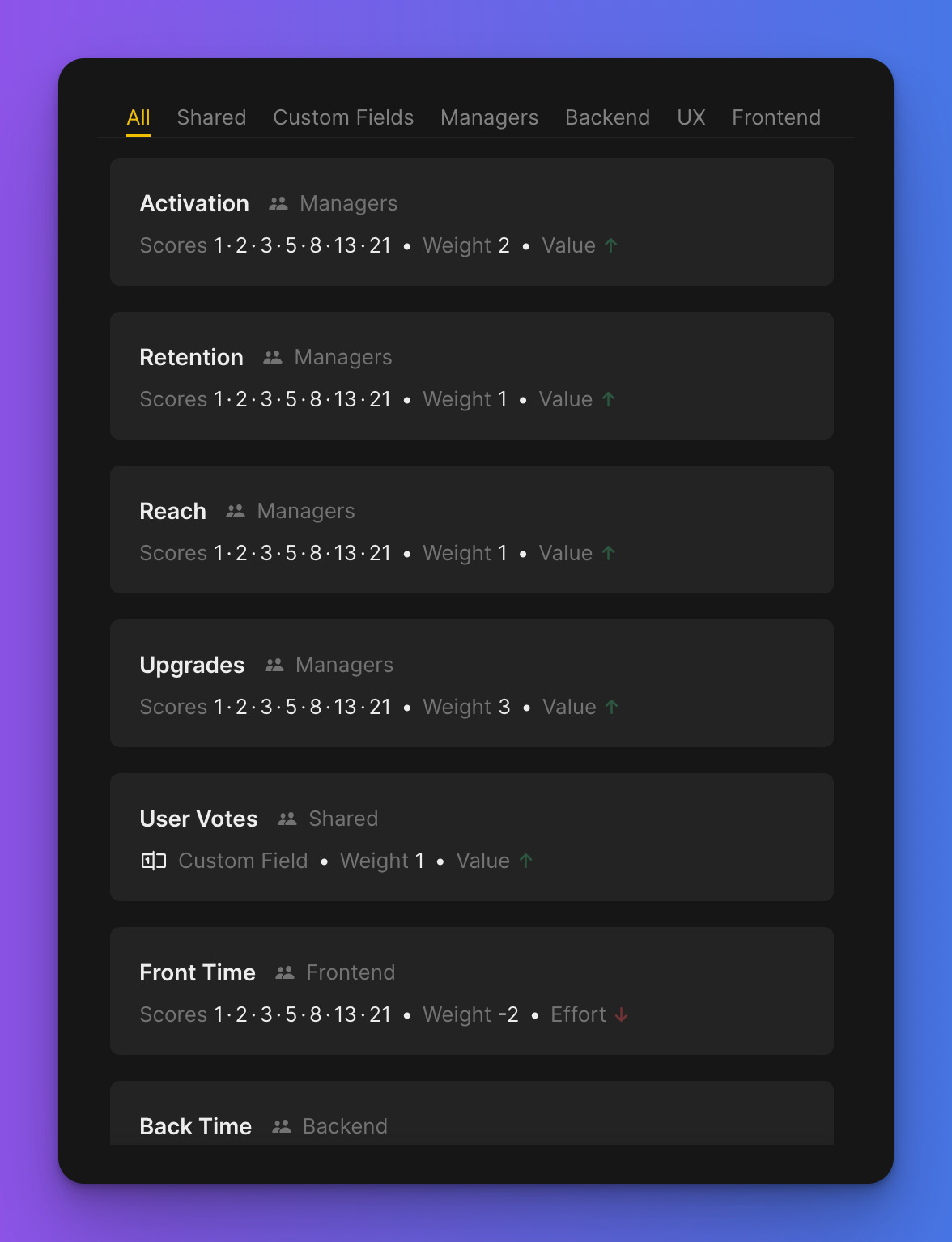
It's not just about something being "important" or "easy to do," but rather, "Please explain how that idea influences our retention criteria."
Prioritize enablers and blockers
It’s really important to learn to prioritize work well and to be able to explain clearly why you did or did not prioritize something. You don’t have unlimited resources or time, especially in the earlier stages of building a company, so you must use it well.
Many task trackers have a common Priority field, which includes a few options. However, the team lacks sufficient clarity regarding why it is important and whether those priority levels are still relevant
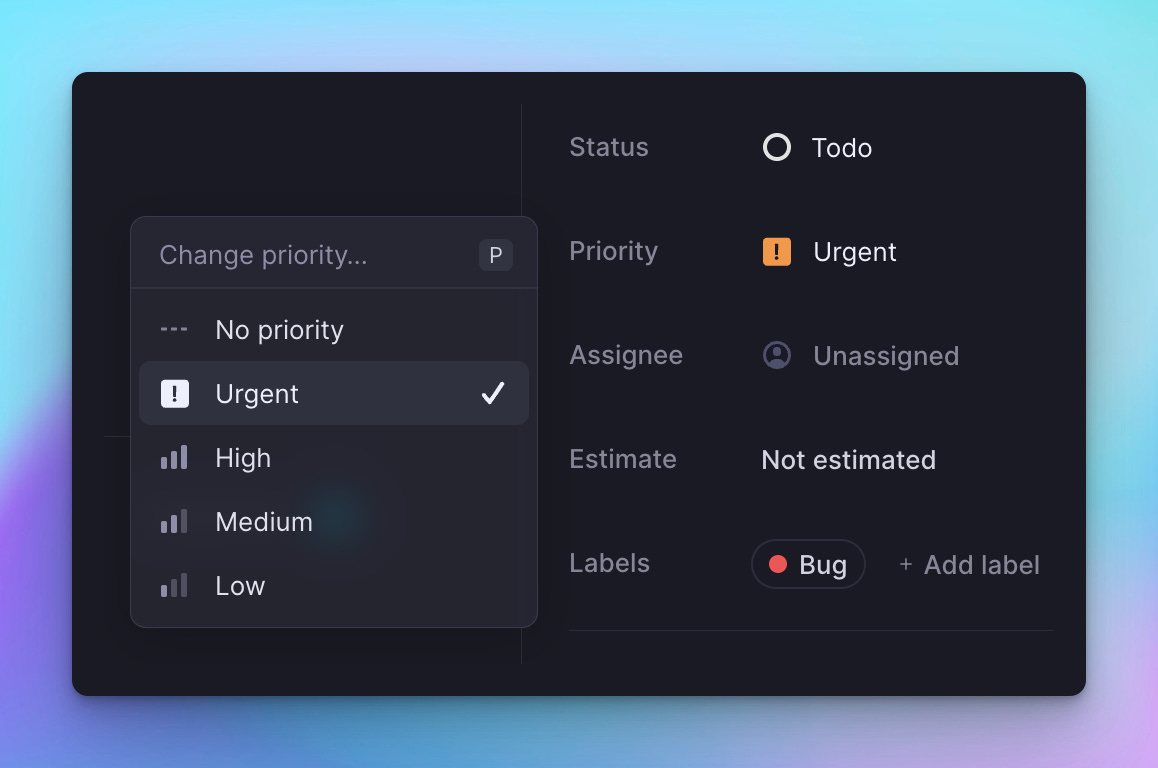
The main issues are:
Is it clear why this priority was set?
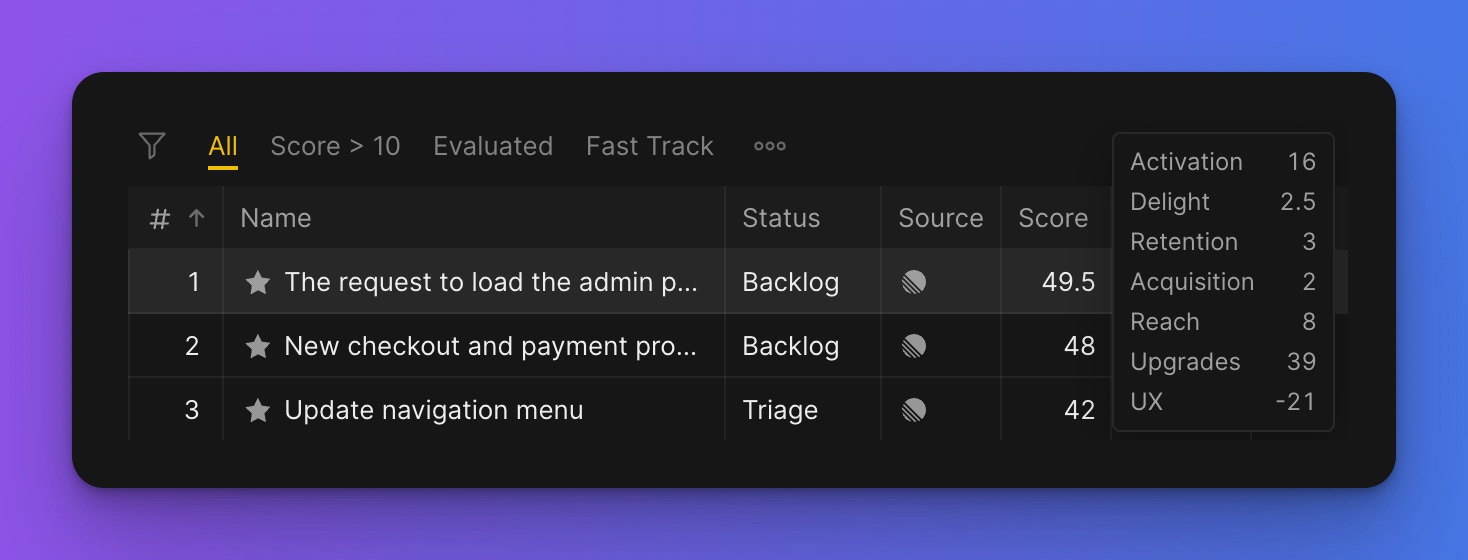
Is it impacting any of our primary metrics? Is it a customer request? Or is it critical technical debt? Check the Total Score to understand why it has its current priority level.
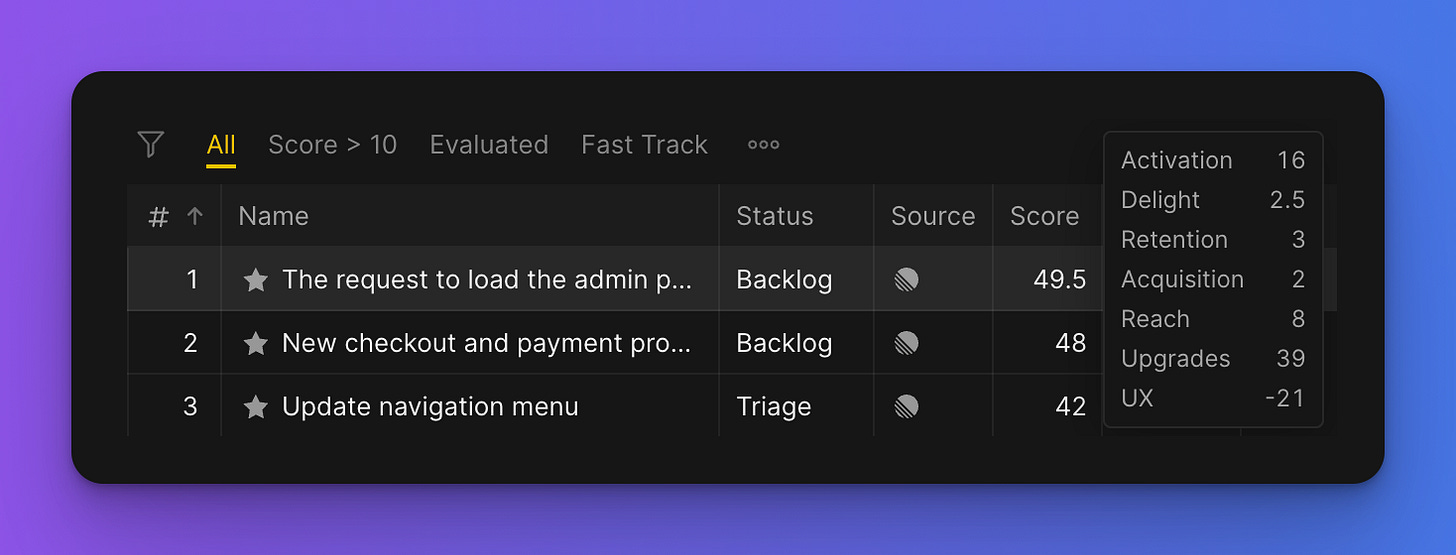
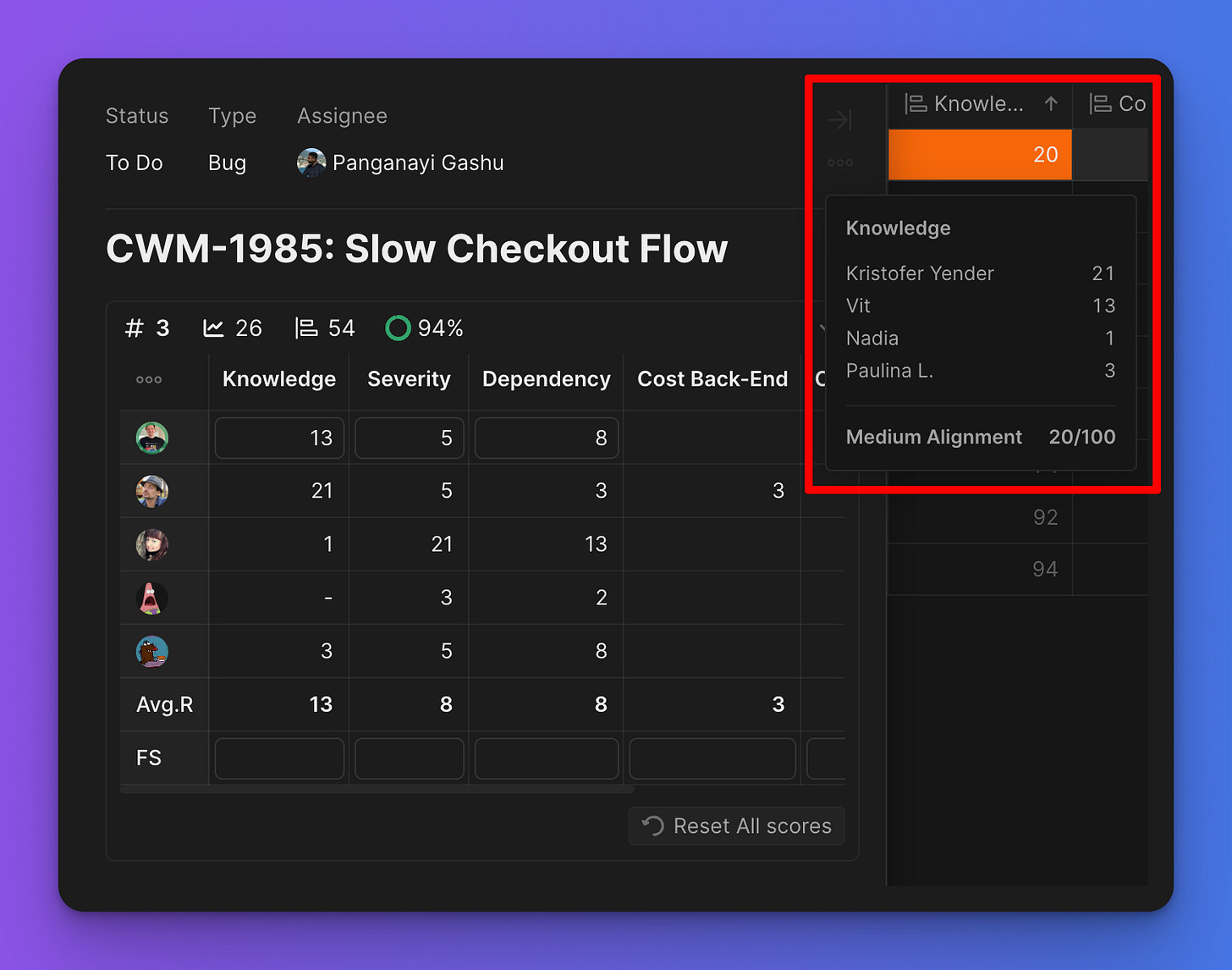
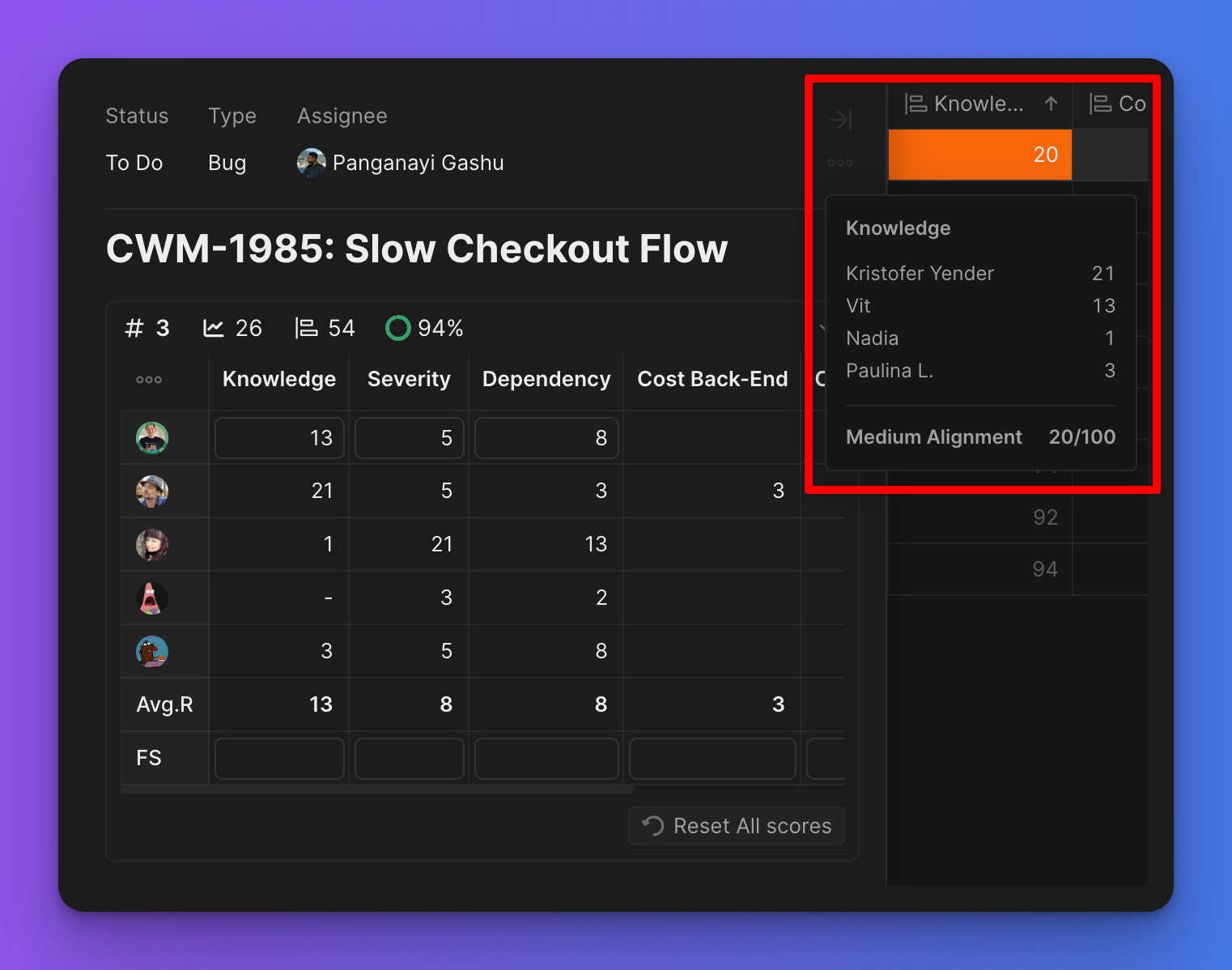
Have you reached a consensus with your team regarding that priority?
Setting priorities yourself can cause you to miss opportunities to engage your teammates in the decision-making process, overlook different opinions, and increase bias.
Ducalis: estimating the backlog asynchronously with teammates, using evaluation poker to reduce bias, and checking team alignment to identify different opinions.
Is that priority still relevant?
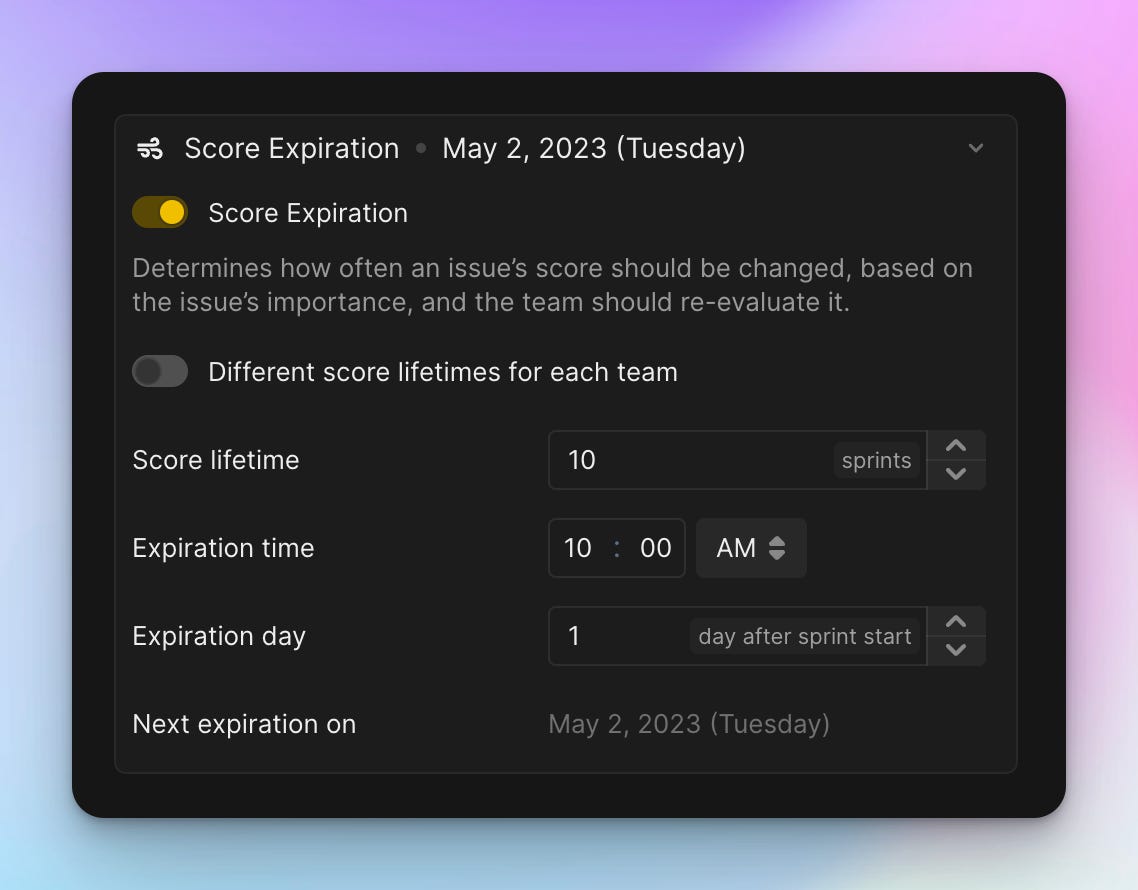
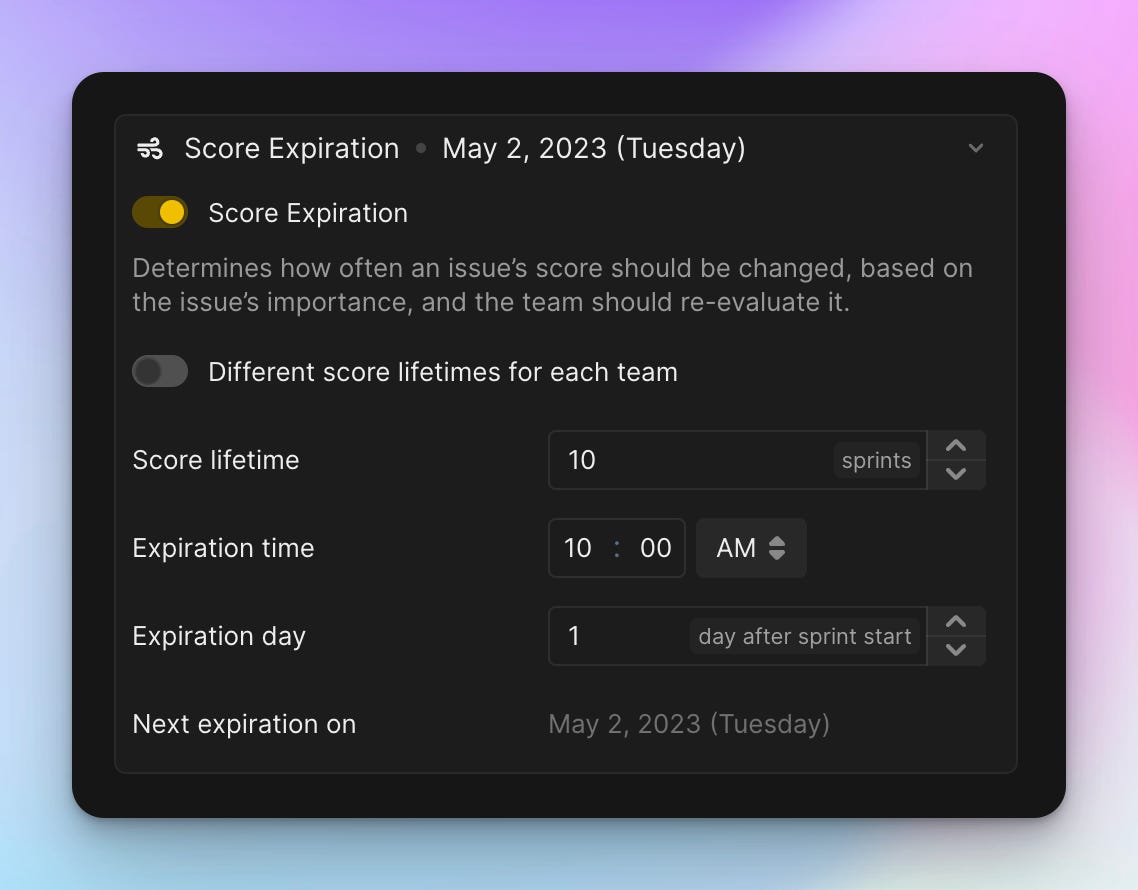
The environment constantly changes with new technologies, customers, competitors, and updated laws and regulations. Therefore, priority levels also change frequently.
Ducalis recommends using the ‘Score Expiration’ feature to reset evaluations periodically and allowing each teammate to re-evaluate at their own pace.
Not enough values to sort by priority.
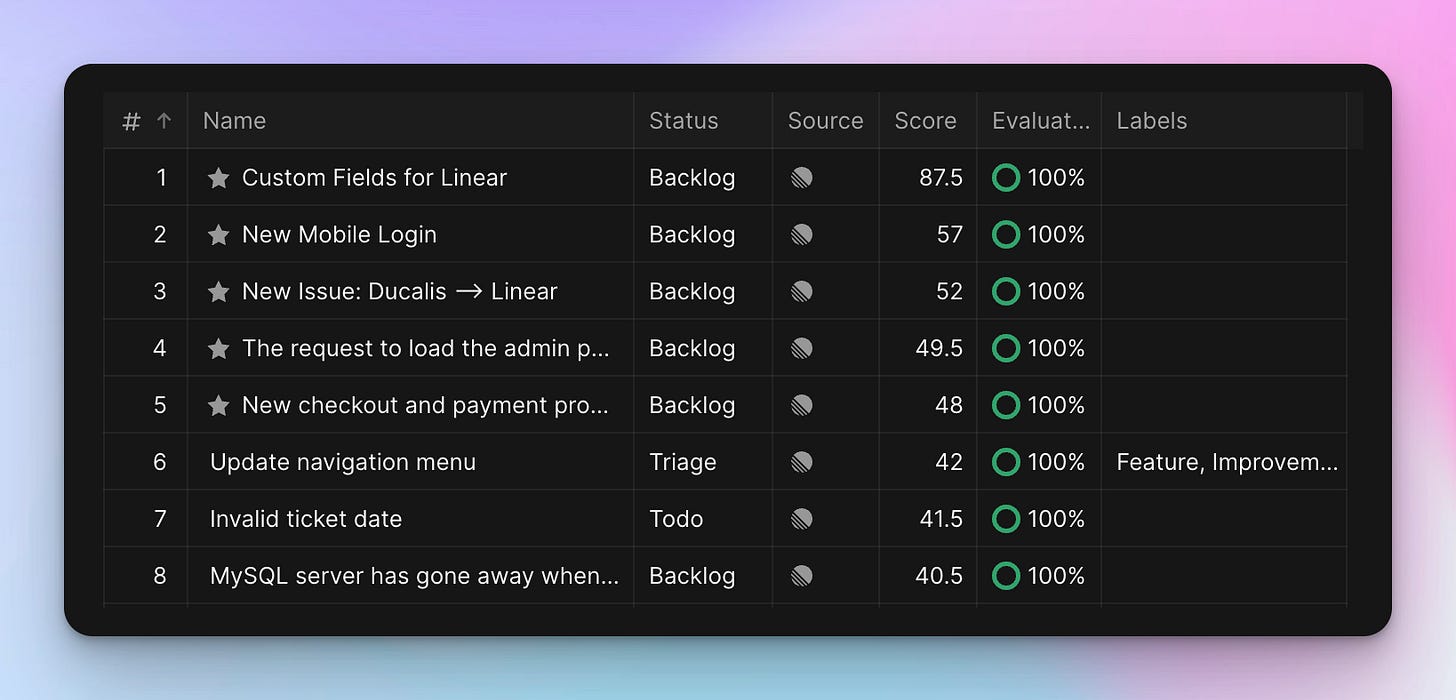
If you have at least a couple dozen backlog items, you may find it puzzling how to sort issues by priority with only four values.
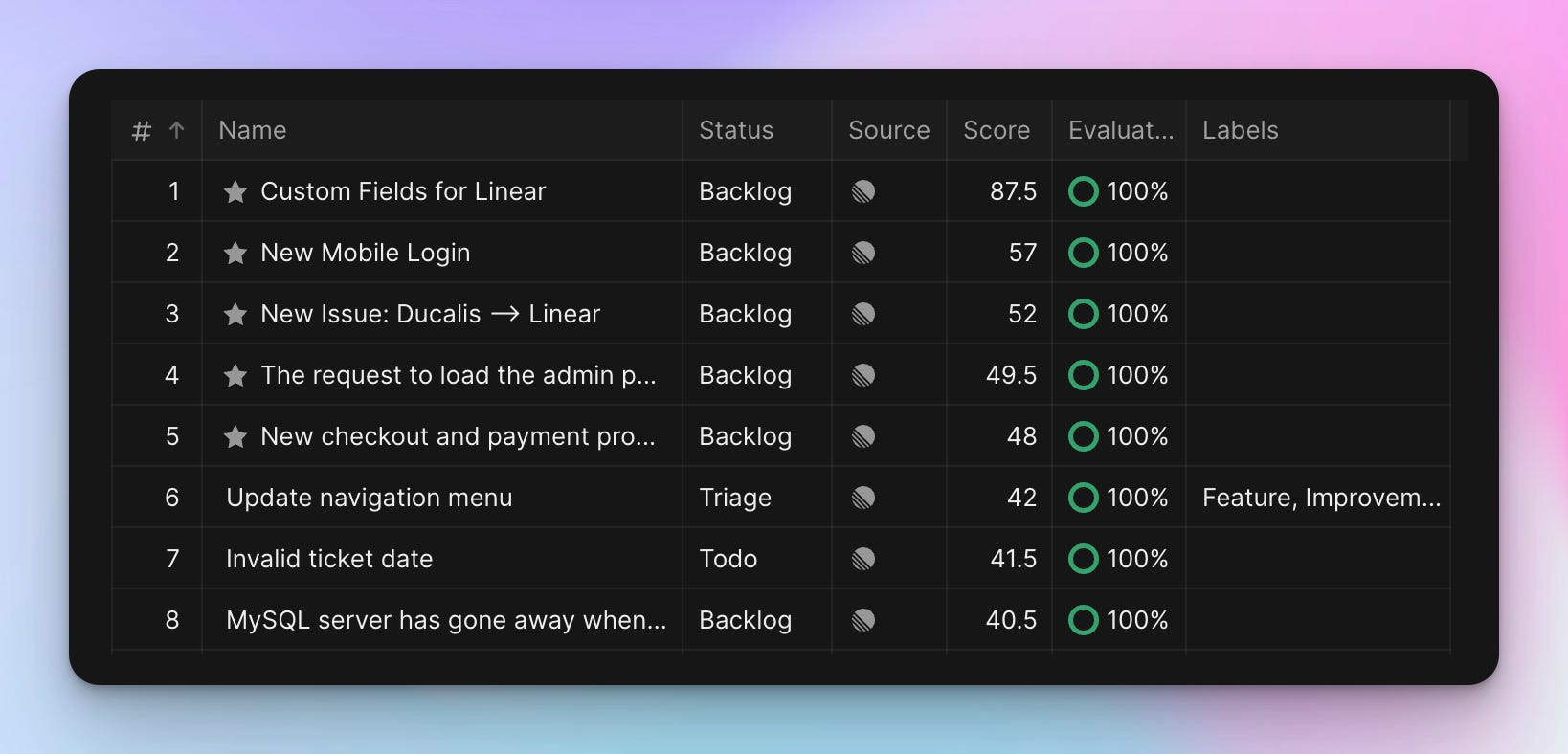
Ducalis: You can quickly sort and filter by any field using priority rank and score.
Run cross-functional teams
Designers and engineers should work together on projects, creating a natural push and pull. Designers bring their skills to explore ideas and push your team's thinking. Engineers can challenge thinking around implementation and will bring the winning ideas to reality. Directly loop in other teams when building features they'll use or ask customers they interact with to use.
Involving a cross-functional team in the product thinking and development process is valuable for uniting team members around their goals. Creating a prioritization routine allows each team member to focus on the main objective through each backlog item.
Ducalis offers a customizable prioritization framework that allows you to create specific criteria for each team member's role to evaluate from their perspective.
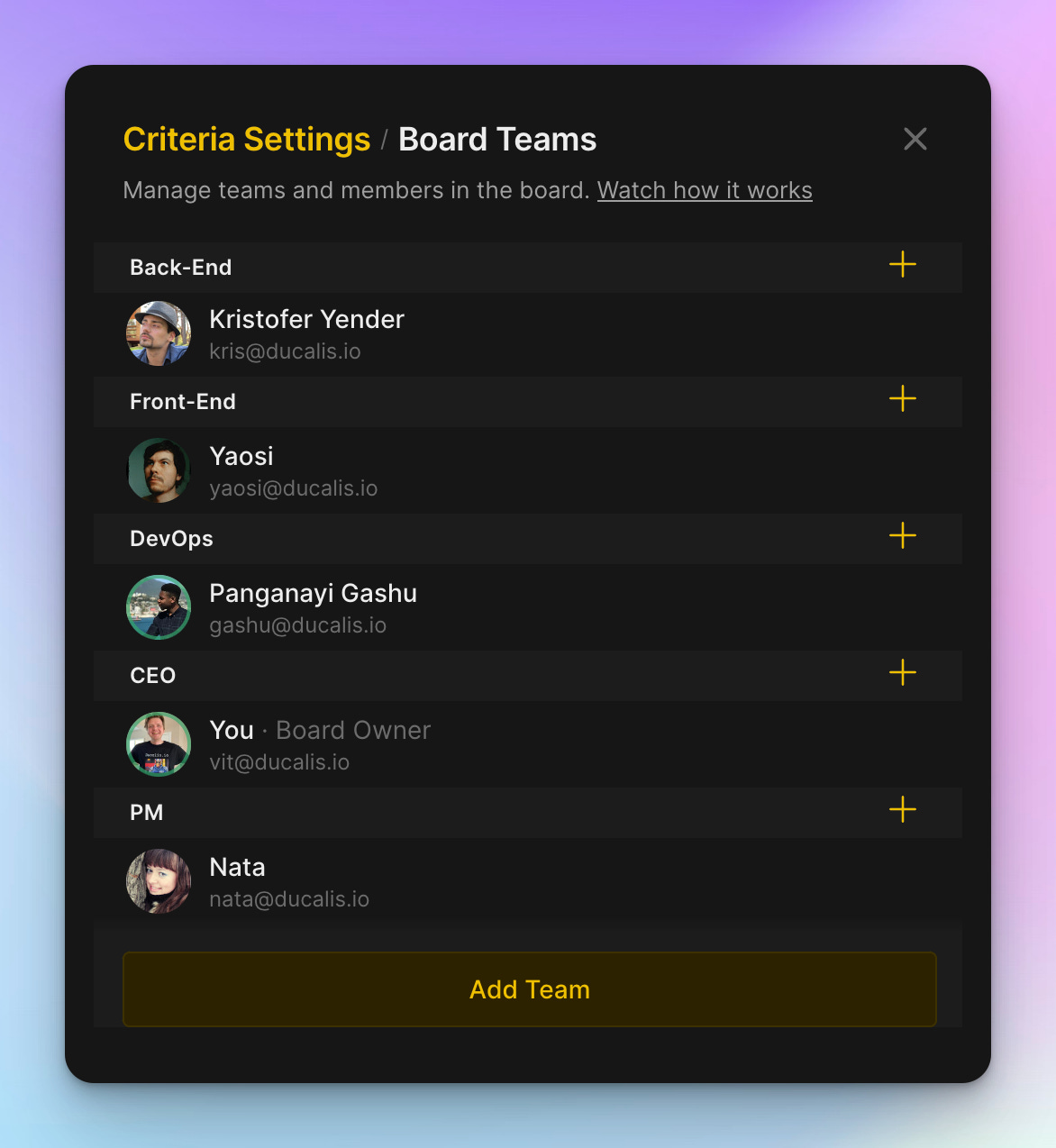
For example, you can include criteria such as back-end effort, front-end story points, UX time, and support questions instead of just a general effort metric.
Scope issues to be as small as possible
It's hard to see visible progress when working on large tasks, which can be demotivating. Break down work into smaller parts and create an issue for each one when possible. Ideally you can complete several concrete tasks each week. It feels great to mark issues as done.
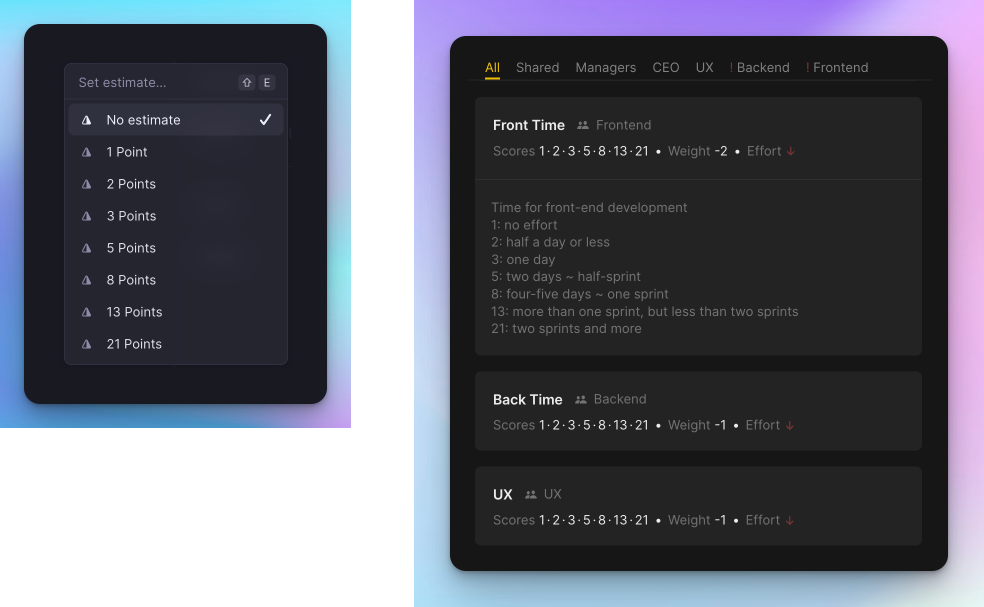
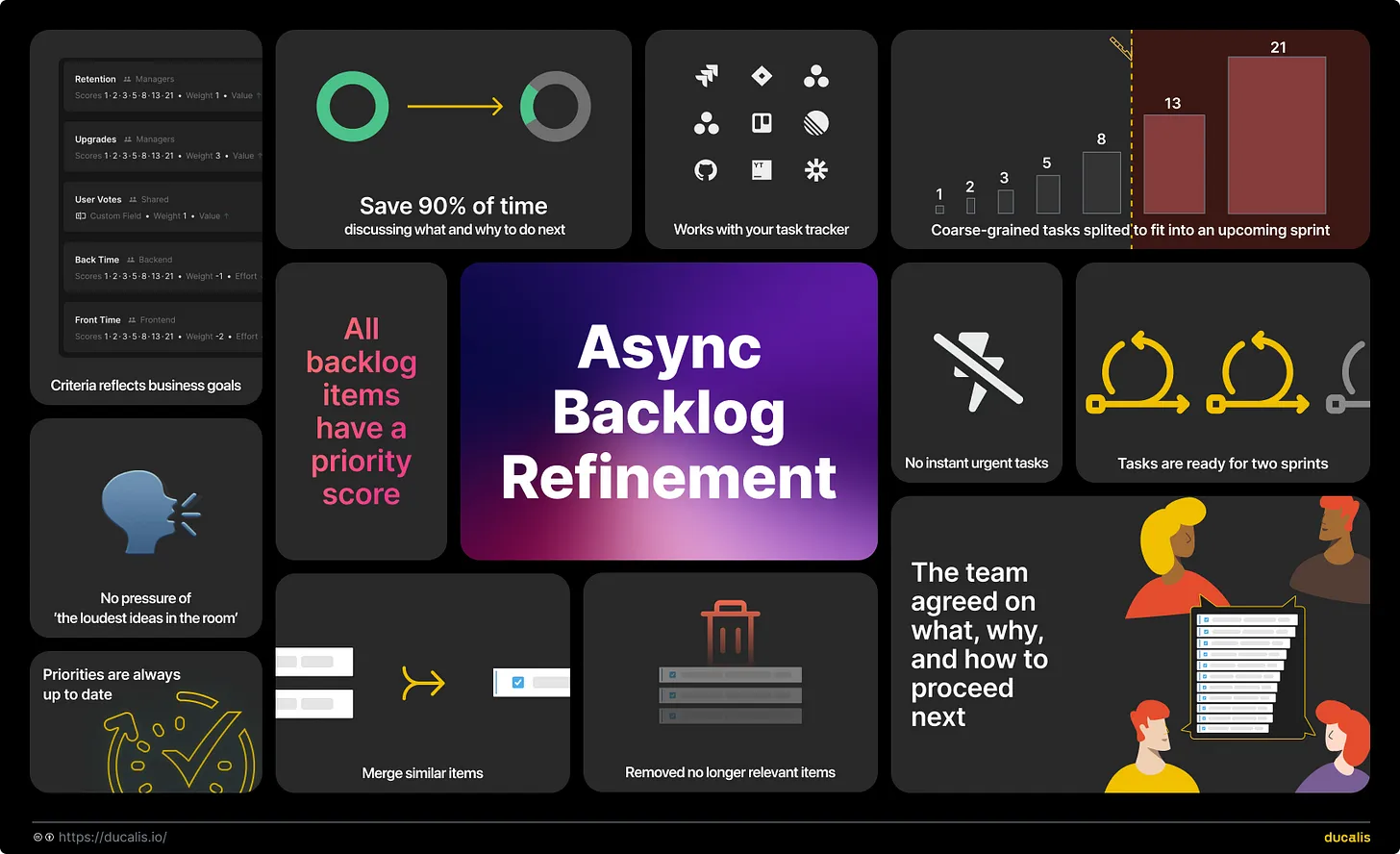
Achieve more with less by cutting through the clutter. Using more precise criteria for prioritizing value and effort, you can strike the right balance between issue size and the value it can bring to stakeholders.
With Ducalis, collect different types of effort estimations from each team member, filter out big story points, and refine those issues into a few smaller ones or sometimes remove them from your backlog.
Keep a manageable backlog
You don't need to save every feature request or piece of feedback. Important ones will resurface and low priority ones will never get fixed. A more focused backlog makes it easier and faster to plan cycles, and ensures the work will actually get done.
Backlog refinement is helpful, but many product teams lack time. If something with high priority stays in your backlog for more than 5 or 10 cycles, it's a signal to update its priority. Creating a prioritization routine and setting score expirations allows your team to evaluate and re-evaluate backlog items constantly.
Build in public
It might feel dangerous to show what you’re building but often it’s more useful. If anything, your competition might be discouraged by your speed and either forced to copy you or avoid copying you.
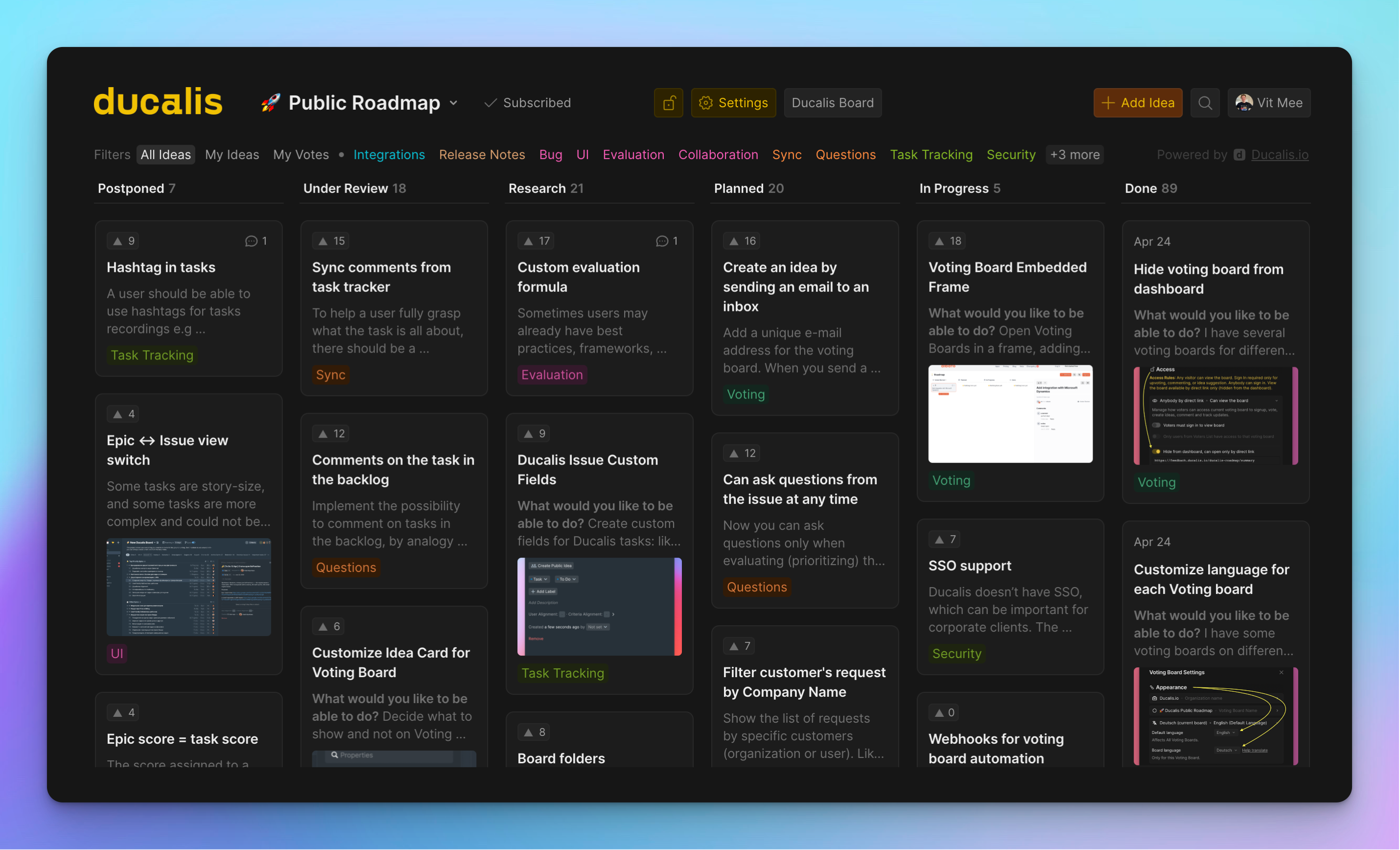
Ducalis provides a solution: use Public Roadmap Tool linked to your backlog. You can manage access to the roadmap.
Incorporate the feedback
and let it refine your product, but don’t let user feedback alone dictate what you build. You can become too reactive to user feedback. This is why it’s good to have goals and roadmaps, that help you balance the needs of the users and the needs of the company.
With Ducalis, you can install a feedback widget and embed a feedback board with a public roadmap into your product. Link that feedback with existing backlog issues or push it to your task tracker within one click.
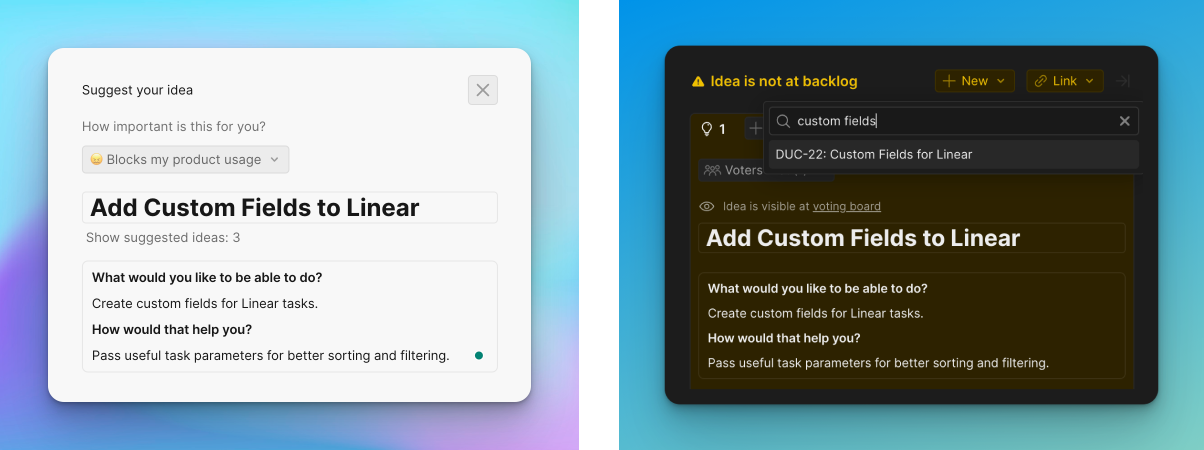
And carry it through the evaluation process.
Build with users
Understand that users will project their needs from the context or product they currently see, not the product that you’re trying to build. It’s common for users to ask for features you should add. Whenever they do, it’s important as a product builder that you ask them questions back. What is the use case? What is the problem they’re trying to solve with this feature or solution? How would their experience of the product be different if the problem was fixed?
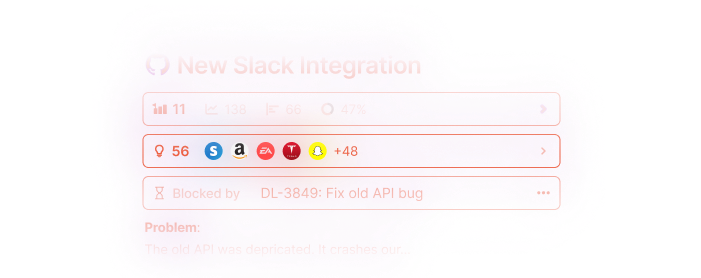
With Ducalis Voting SDK, you can pre-authorize your existing product users with their credentials. It works as a single sign-on (SSO) to eliminate the unnecessary sign-in feedback step. You will also know whether each voter currently uses your product and see the exact customers in your backlog, clearly understanding who you are building for.
Understand your users
The more popular your product, the more feedback you'll get. Overflowing inboxes are a good sign unless they're bug reports. Collect it and use it as a research library when developing new features. Try to spot trends. Use feedback, even complaints, as an opportunity to get to know your users and ask them to explain why they want a specific feature so you find out their needs. Solve the problem – don’t just build the feature.
Pass as many custom properties as you need to understand the complete picture of your feedback and sort it by many parameters.
Build for the right users
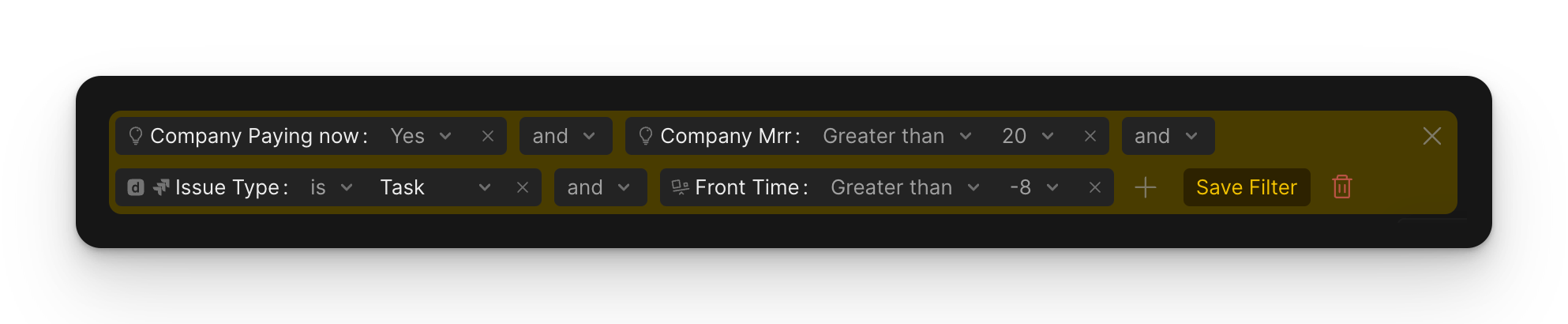
You may also talk to users who have a lot of feedback but who aren’t in your target demographic or aren’t it now. If you think you are building for things for early-stage startups, listening to an enterprise customer will likely set you on the wrong path and it’s unlikely that they will even become a customer.
By linking voter properties and requests with backlog issues, you can segment your backlog plans by the request source. This enables you to answer questions such as:
What are our new free users demanding?
What is the most upvoted request by enterprise customers?
What should we do for the European users?
What backlog issues should we plan for our startup customers?
Write a changelog
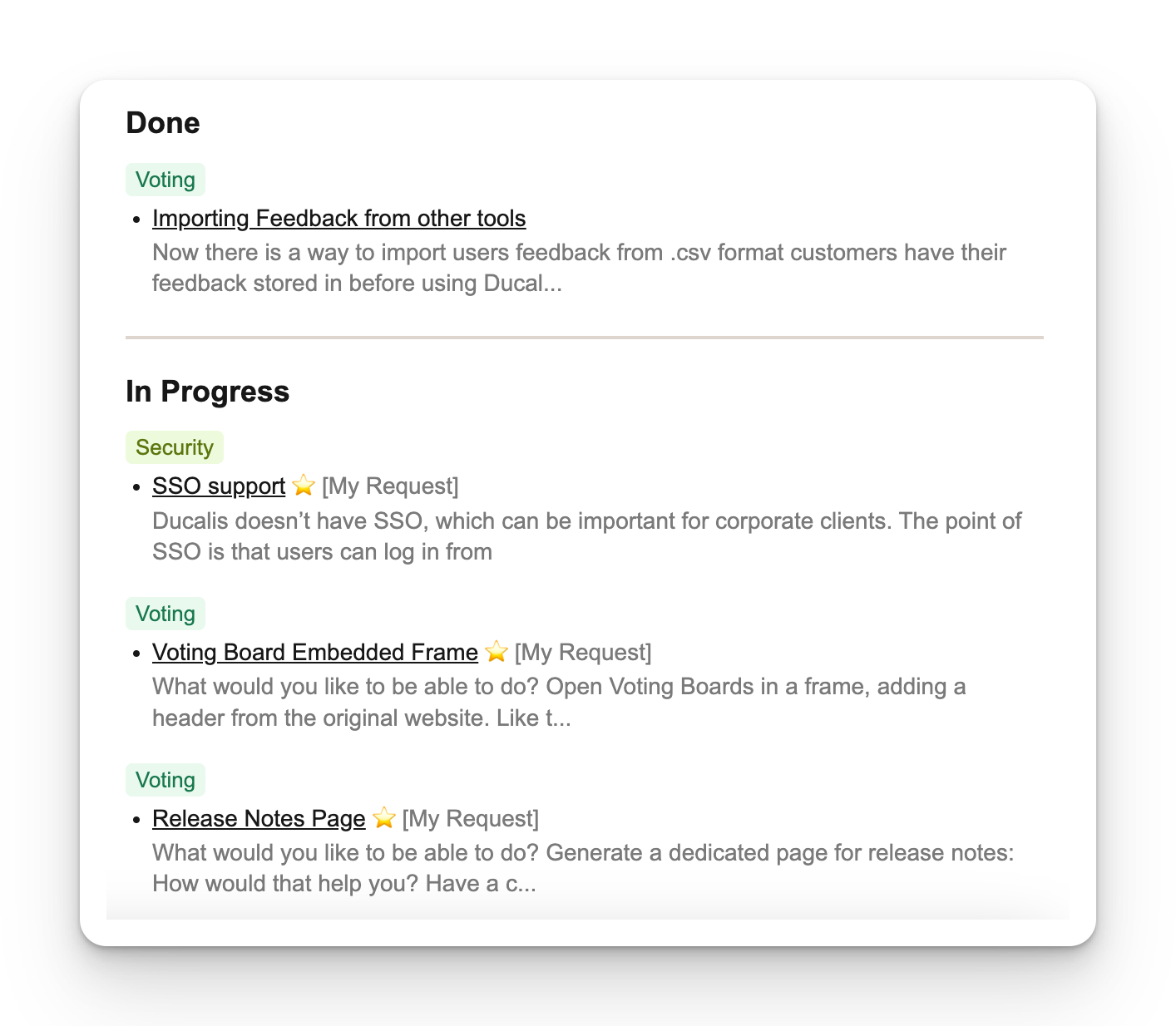
It’s important to look back and celebrate what you achieved as a team. Consistent changelogs also communicate to the user new features, the value they get from your product, and your commitment to improving it. It's also an easy way to connect your team's individual work to the collective value they create.
Ducalis can generate an auto-digest of public roadmap updates. Enabling this feature ensures you always have a pre-generated update of new features. You can share your work in progress and engage your users by informing them about your work.
Say no to busy work
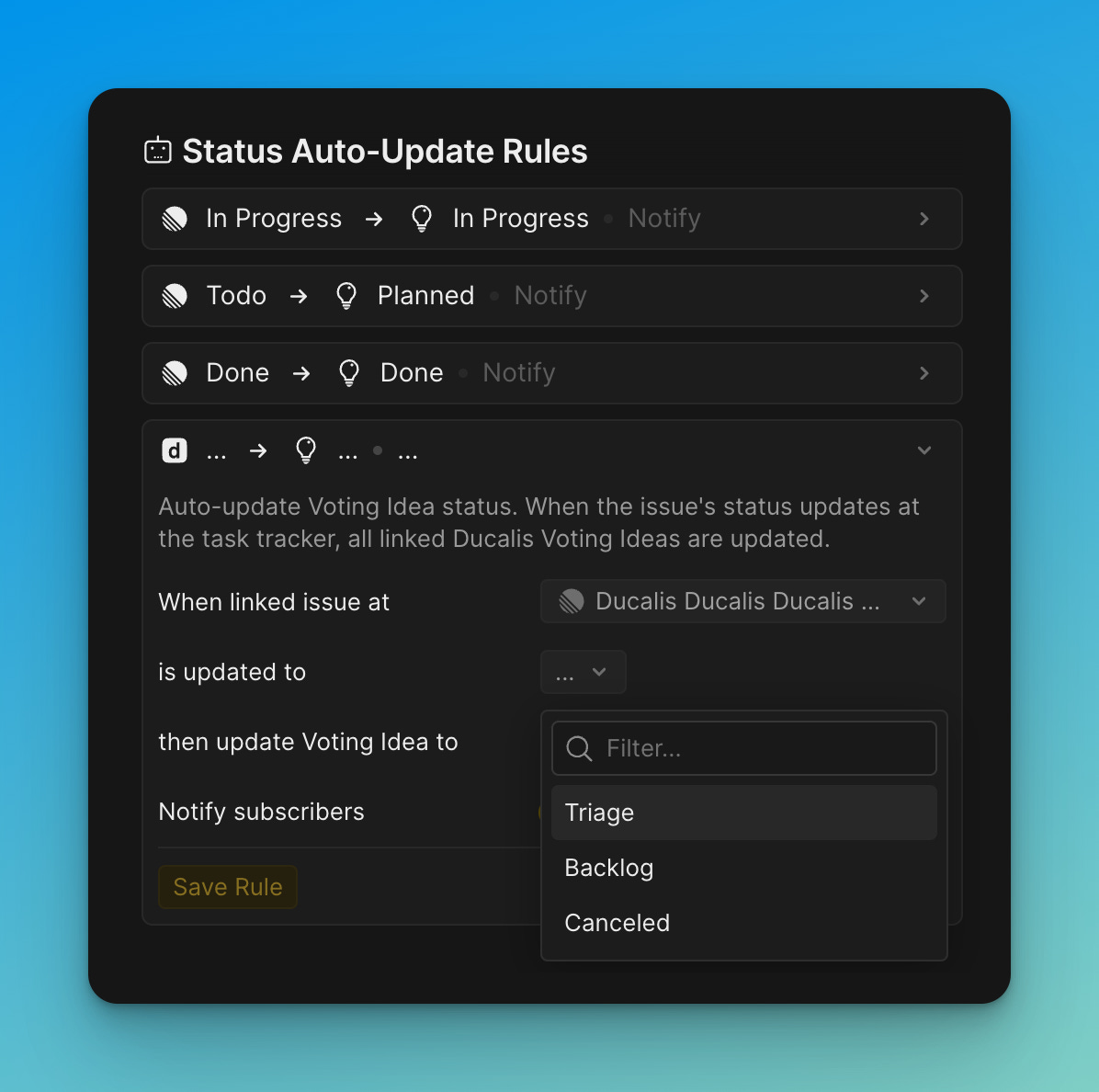
Our tools should not make us the designers and maintainers of them. We should throw away or automate the busy work so you can focus on the more important work.
Using async prioritization techniques can save your team up to 90% of discussion time on what to do next and why. Implementing feedback, public roadmaps, and changelog automation can save dozens of hours in manual task updating and writing.
To generate ideas for your public roadmap, consider using AI-powered rewriting tools.
Invest in planning
Carve out meaningful time before your first meeting together to think through company goals and what parts of the product you want to improve most. Use your product intuition. Review customer feedback and feature requests. It's also important to review company metrics such as sign up, activation, retention and revenue so you know how to make trade-offs between features and whether specific areas of the app should be prioritized higher than others.
That’s a straightforward idea, but we are all overwhelmed with new tasks, ideas, urgent meetings, and requests in real life, especially at the current time of ‘that-meeting-could-be-an-email’ and widespread Zoom fatigue. Invest in planning meetings wisely.
Use Ducalis’ setting for creating a prioritization habit:
Set a comfortable evaluation sprint duration
Try Evaluation poker for asynchronous backlog estimation
Announce the moment of for score reveal
Discuss only controversial estimates for a team alignment report
Tune some Final Scores
Run a planning meeting based on the priority report
Create a Ducalis account today and try all those features with a free trial.